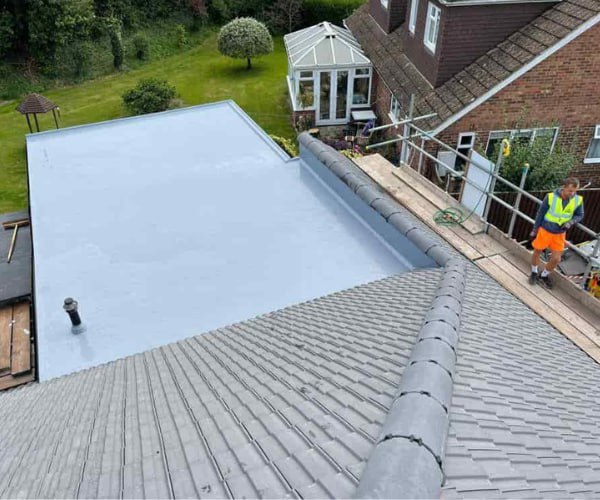
Is It Normal for an Older Roof to Need Frequent Repairs?
An older roof may require more attention than a recently installed one, but frequent repairs should not automatically be accepted as unavoidable. Occasional maintenance can be entirely normal, particularly where one component has weathered faster than the rest. A continuing pattern of slipped tiles, recurring leaks and new defects may indicate broader deterioration.
For homeowners in Sandy, Bedfordshire, the important question is not simply how old the roof is. Its present condition, repair history and ability to remain weather-resistant provide a much clearer indication of whether further repairs are sensible.
What Frequent Repairs Can Reveal About an Older Roof
Every roof is made up of connected components. Tiles or slates depend on secure fixings, sound battens, serviceable underlay and properly formed junctions. As these materials age, several may begin to deteriorate at around the same time.
A professional inspection can establish whether recent problems are isolated faults or symptoms of a roofing system that is becoming increasingly unreliable.
Age Alone Does Not Determine Roof Condition
Two roofs of a similar age can be in very different condition. Their performance may be influenced by:
- The quality of the original installation
- The materials used
- Exposure to wind and rain
- Previous maintenance
- The effectiveness of earlier repairs
- Roof pitch and design
- Ventilation within the roof space
- The condition of drainage and junction details
An older roof that has been well installed and maintained may remain serviceable for many years. A younger roof can develop repeated problems if workmanship or supporting materials are unsuitable.
Occasional Localised Repairs Can Be Normal
A small number of isolated repairs does not necessarily mean the complete roof is failing. Individual tiles can crack, flashing may need attention and exposed details may weather faster than less vulnerable areas.
Localised repairs may remain appropriate when:
- The defect has a clear cause
- Surrounding materials remain sound
- The same problem is not recurring
- Water ingress is limited
- Battens and underlay remain serviceable
- Most of the roof covering is secure
The repair should correct the underlying defect rather than simply conceal its visible symptoms.
Repeated Leaks Deserve a Wider Inspection
A roof that leaks repeatedly after repair may have more than one point of water entry. Alternatively, the original source may not have been identified correctly.
Water can travel along underlay, rafters and other surfaces before becoming visible inside the property. The location of a ceiling stain does not always correspond with the external defect directly above it.
A wider inspection can trace likely water routes and assess roof junctions, flashing and surrounding materials.
Tiles and Slates May Become Difficult to Repair
Roofing materials can become brittle as they weather. Tiles may crack during handling, while older slates can develop weakened fixing holes or begin to separate into layers.
If neighbouring materials break whenever a repair is attempted, accessing one defect can create another. This is a sign that the roof covering may no longer be suitable for repeated localised work.
The condition of the complete slope should then be considered, not only the visibly damaged tile or slate.
Fixings Can Fail Across Several Areas
Repeated tile slippage may be caused by deteriorated nails, clips or tile nibs. If similar fixings were used throughout the roof, one failure may indicate that others are approaching the same condition.
Replacing individual slipped tiles can restore the surface temporarily, but it will not resolve widespread fixing deterioration. A professional roofer should establish whether the issue is localised or repeated across several sections.
Battens and Underlay Can Deteriorate Beneath the Surface
Some of the most important roofing components are hidden beneath the tiles. Timber battens may weaken following prolonged moisture exposure, while underlay can become brittle, torn or damaged around fixings.
When these materials deteriorate across a broad area, repairs to the visible covering may not provide dependable weather protection. Selected tiles may need to be lifted so the supporting layers can be assessed properly.
Previous Repairs May Create an Inconsistent Roof
An older roof can accumulate different tiles, patches and repair materials over time. Although each intervention may have addressed a particular defect, the completed roof can become uneven in performance.
Problems may develop where old and new materials meet, especially if their profiles, fixings or weathering characteristics differ. A review of the repair history can help identify whether recurring faults are connected to earlier work.
How Frequent Is Too Frequent?
There is no single number of repairs that applies to every roof. Frequency should be considered alongside the location and cause of each problem.
Warning signs of wider decline include:
- New faults developing in different areas
- The same leak returning after repair
- Several tiles slipping during moderate weather
- Widespread cracking or brittleness
- Dampness across multiple parts of the roof space
- Repairs becoming increasingly difficult to complete
- Ridge, verge, valley and flashing defects appearing together
A roof that repeatedly develops unrelated-looking faults may require assessment as one complete system.
When Are Further Repairs Still Worthwhile?
Further repairs may be sensible if most of the roof remains secure and the affected areas can be restored without disturbing fragile materials elsewhere.
A dependable repair should:
- Address the cause of the defect
- Use compatible materials
- Restore correct overlaps and fixings
- Include supporting components where necessary
- Integrate properly with the surrounding roof
- Provide a reasonable expectation of lasting performance
A professional contractor should explain why the proposed repair is suitable and what condition the remaining roof is in.
When Should Replacement Be Considered?
Replacement may be more appropriate when deterioration is widespread and several roofing components are failing together. This may include brittle coverings, damaged underlay, weakened battens and unreliable fixings across multiple slopes.
It should not be recommended solely because a roof is old. The decision should be supported by evidence that further patch repairs are unlikely to restore reliable performance.
What Should a Professional Roof Assessment Cover?
A thorough inspection should consider:
- The condition of tiles or slates
- Fixings, battens and underlay
- Ridges, hips, verges and valleys
- Flashing around roof junctions
- Signs of water entry inside the roof space
- Structural movement or sagging
- Previous repairs
- The location and frequency of recurring defects
This creates a clear basis for deciding whether maintenance, targeted repairs or replacement is the appropriate next step.
Conclusion
It can be normal for an older roof to need occasional maintenance, but frequent repairs should prompt a broader assessment. Repeated leaks, widespread tile movement and deterioration beneath the covering may indicate that individual repairs are no longer addressing the roof’s overall condition.
FP Roofing Sandy provides professional roof inspections and repairs in Sandy, Bedfordshire. If your roof continues to develop new or recurring problems, contact our team to arrange an assessment and receive clear guidance on the most appropriate solution.
Call us on: 01767 667 088
Click here to find out more about FP Roofing Sandy
Click here to complete our contact form and see how we can help with your roofing needs.